What is the Endowment Effect?
The endowment effect is an emotional bias where we overvalue things once we own them or feel a sense of ownership.
Put simply, people place a higher value on items after they have established ownership, even when the market value hasn’t changed.
Understanding the Endowment Effect
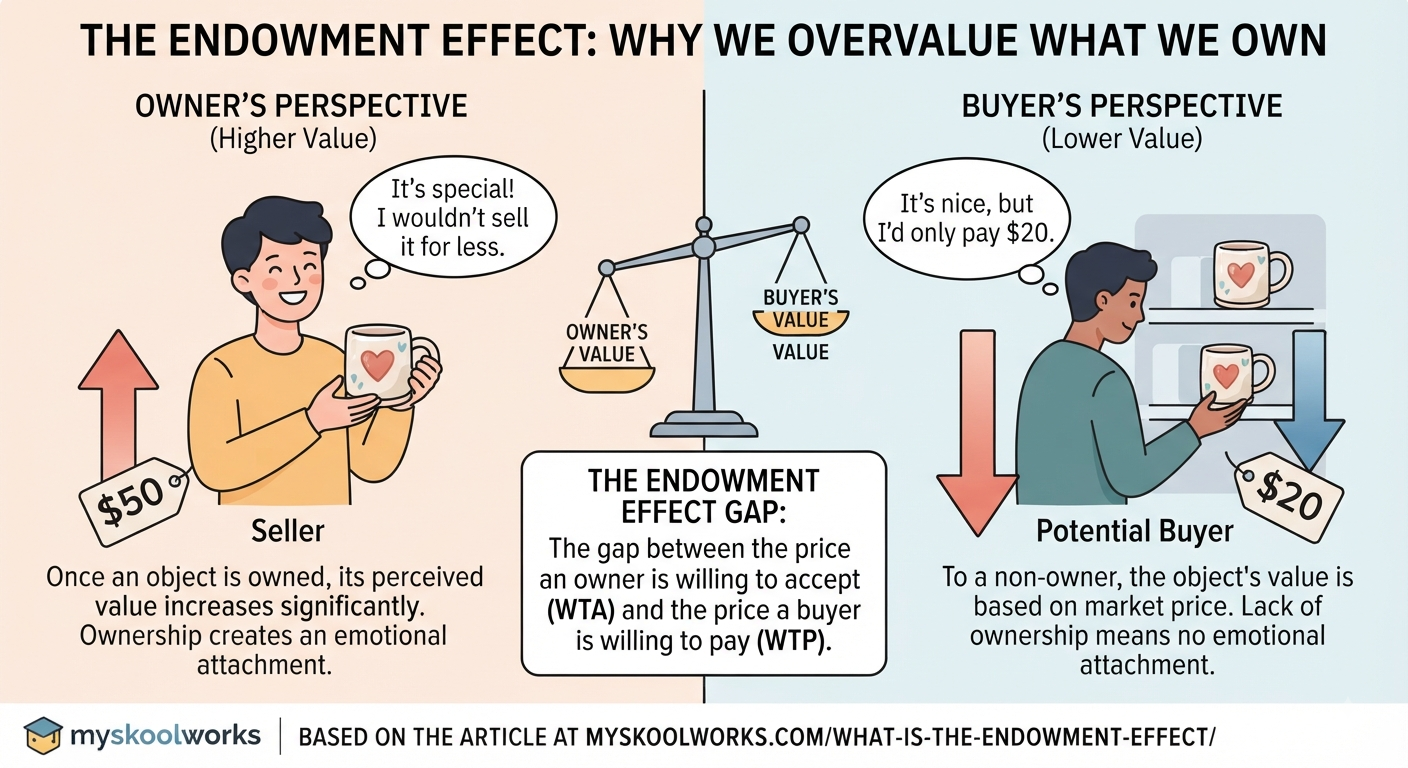
The endowment effect occurs when we overvalue something we own, regardless of its true market value. This is common with items that have emotional or symbolic meaning. Research using simple goods like coffee mugs shows sellers usually demand more than buyers are willing to pay.
Why? Two reasons:
1. Sellers don’t want to accept less than their personal value of the item.
2. Buyers won’t pay more than the market price.
Examples
Test drives: Car dealerships let buyers test drive cars so they feel temporary ownership. This emotional connection often leads people to spend more.
Refusing high offers: People may decline to sell an item for more than its market value simply because they own it and emotionally overvalue it.
The Psychology Behind It
- Loss aversion: People prefer avoiding losses over gaining equivalent wins, making them overvalue what they might lose.
- Ownership: We naturally value what we already own more than identical alternatives, whether bought or gifted.
The Endowment Effect in Retail
- Try before you buy: Allowing customers to interact freely with products builds attachment.
- Fitting rooms: Wearing an item creates a sense of ownership and increases perceived value.
- Buy now, pay later: Online stores mimic ownership by letting customers try products before paying.
The Endowment Effect Online
Digital products use free trials to build a sense of ownership. Once users integrate a product into daily life, they are more willing to pay to keep it.
This also explains why customers hesitate to switch providers — emotional attachment makes alternatives seem less valuable.
Dangers
Overvaluing possessions can lead to poor financial decisions. Collectors, for example, may refuse excellent offers because their emotional valuation is too high.
Summary
The endowment effect is a powerful emotional bias that brands can use to build value and influence behavior. Identify the behavioral shift you want, then design experiences that foster a sense of ownership.