Life can feel fast, noisy, and uncertain. In the middle of all this, it’s easy to focus on what is missing or going wrong. But there is a simple and powerful antidote to negativity — gratitude. Gratitude can lift our mood, improve our outlook, and support our overall well-being.
Let’s explore what gratitude really means, the science behind it, how it changes our mood, and simple ways to practice it every day.
Understanding Gratitude
Gratitude is more than saying “thank you.” It’s a mindset — a way of seeing and appreciating the good in life, even when things aren’t perfect. It’s recognizing small moments of joy, support, or kindness. Gratitude can be simple, like thanking someone who holds the door, or deep, like appreciating someone who has shaped your life.
For centuries, cultures and traditions around the world have taught gratitude as a way to build stronger relationships and live a happier, more meaningful life. Gratitude isn’t just a feeling — it’s a practice that trains the mind to focus on what’s going right instead of what’s going wrong.
The Science Behind Gratitude
Modern research shows gratitude has real effects on the brain and body.
Better mental health: Gratitude increases feelings of happiness and reduces symptoms of stress, anxiety, and depression.
Lower stress: People who practice gratitude often have lower cortisol levels and bounce back more easily during difficult times.
Improved self-esteem: Gratitude helps us appreciate our strengths, achievements, and progress.
Physical health benefits: Gratitude is linked to better sleep, stronger immune function, healthier habits, and even longer life.
Gratitude triggers the brain’s reward system by releasing dopamine and serotonin — chemicals that boost mood. Over time, this creates a positive cycle that makes gratitude feel more natural and automatic.
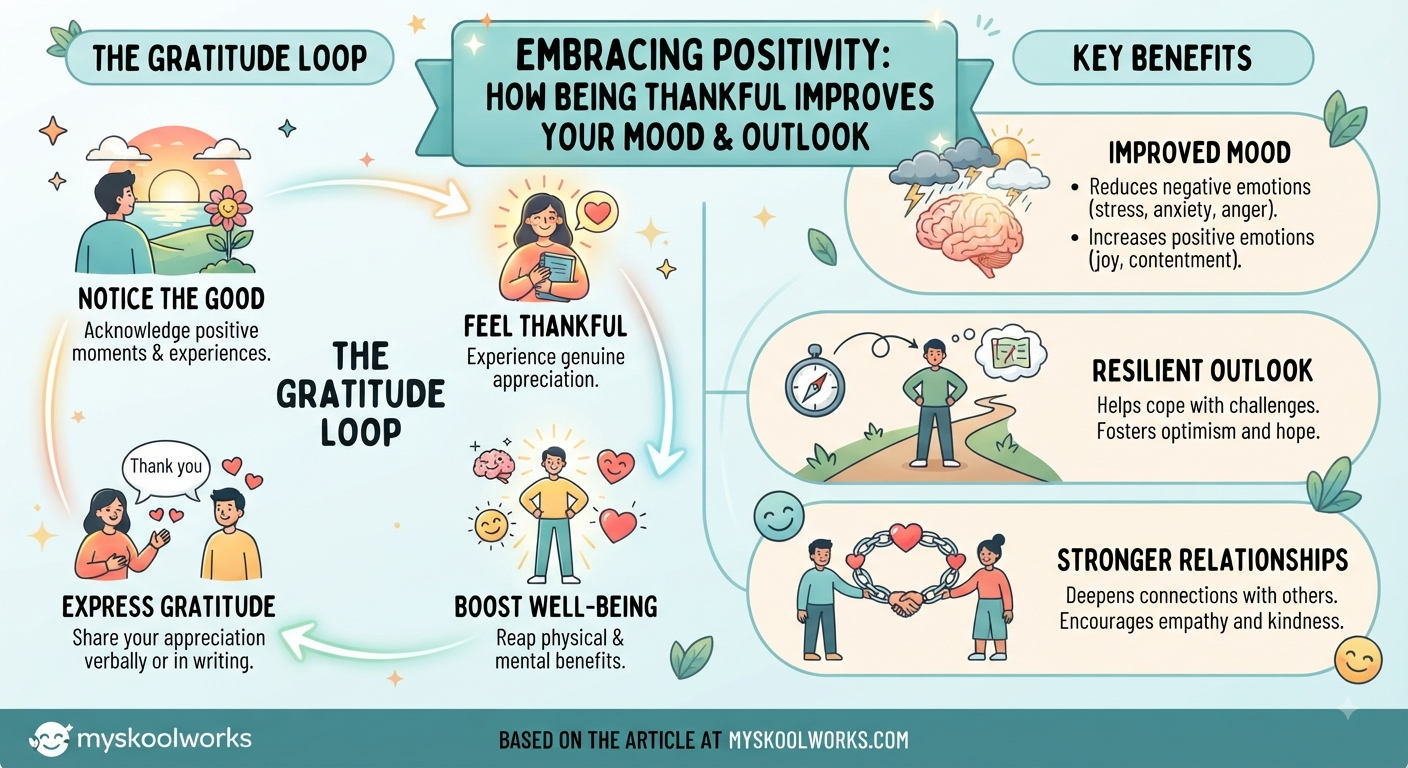
How Gratitude Improves Mood and Outlook
Shifts focus from scarcity to abundance
Gratitude helps us see what we have, not just what we lack. This shift increases contentment and reduces the pressure to constantly want more.
Builds resilience
Focusing on positive aspects of life creates emotional strength. Gratitude helps us recover faster from setbacks and stay hopeful during challenges.
Strengthens relationships
Expressing appreciation deepens connection and trust. Feeling valued — and valuing others — improves happiness and emotional well-being.
Cultivates optimism
When we recall moments of gratitude, we naturally feel more confident about the future and more motivated to create positive experiences.
Practical Ways to Cultivate Gratitude
1. Keep a gratitude journal
Write down three to five things you’re grateful for each day. Small moments count.
2. Express your thanks
Say it, text it, or write it. Sharing gratitude strengthens relationships and boosts your own mood.
3. Practice mindfulness
Mindfulness helps you notice small joys — a warm drink, sunlight, or a quiet moment.
4. Perform random acts of kindness
Helping others naturally increases feelings of gratitude and joy.
5. Count blessings during tough times
Even in difficulty, looking for one small positive can provide comfort and strength.
6. Create a gratitude jar
Write down positive moments on small notes and drop them into a jar. Revisit them whenever you need encouragement.
7. Set gratitude reminders
Use alarms or phone reminders to pause and reflect on something positive.
8. Try “three good things” before bed
End your day by recalling three positive moments. This improves sleep and mood.
9. Join or create a gratitude group
Sharing gratitude with others increases motivation and builds community.
Overcoming Challenges
Negativity bias: The brain naturally focuses on problems. Redirect your thoughts when you notice negativity taking over.
Difficult circumstances: Gratitude doesn’t erase hardship, but it helps you find moments of light during dark times.
Building a habit: Start small and stay consistent. Gratitude grows with practice.
Comparison and envy: Remember that everyone’s journey is different. Focus on your own blessings.
Expecting quick results: Gratitude works gradually. Stay patient with the process.
Balancing realism and positivity: Gratitude isn’t ignoring problems — it’s choosing to also acknowledge the good.
Tips for Parents and Educators
Be role models
Show gratitude through your actions and words.
Start early
Encourage kids to name something they’re thankful for each day.
Use gratitude rituals
Try a family journal or group gratitude circle.
Encourage kindness
Acts of kindness help children feel more grateful and connected.
Teach perspective
Help children understand different life experiences and appreciate what they have.
Create gratitude boards
Let kids add drawings, notes, or photos of things they love.
Promote mindfulness
Simple breathing exercises help children notice and appreciate the present moment.
Celebrate effort
Recognize hard work, not just outcomes. This builds confidence and gratitude.
Encourage journaling
Older kids can reflect privately on daily blessings.
Conclusion
Gratitude is a powerful tool that can reshape the way we experience life. With practice, it brings more joy, resilience, and connection. Even in challenging times, gratitude helps us see the beauty around us and move forward with hope. Every moment of gratitude brings us closer to a brighter, more fulfilling life.