Walking before going to sleep offers several physical and mental health benefits. Here are some of the most helpful ways a nighttime walk can improve your overall well-being.
1. Improved sleep quality
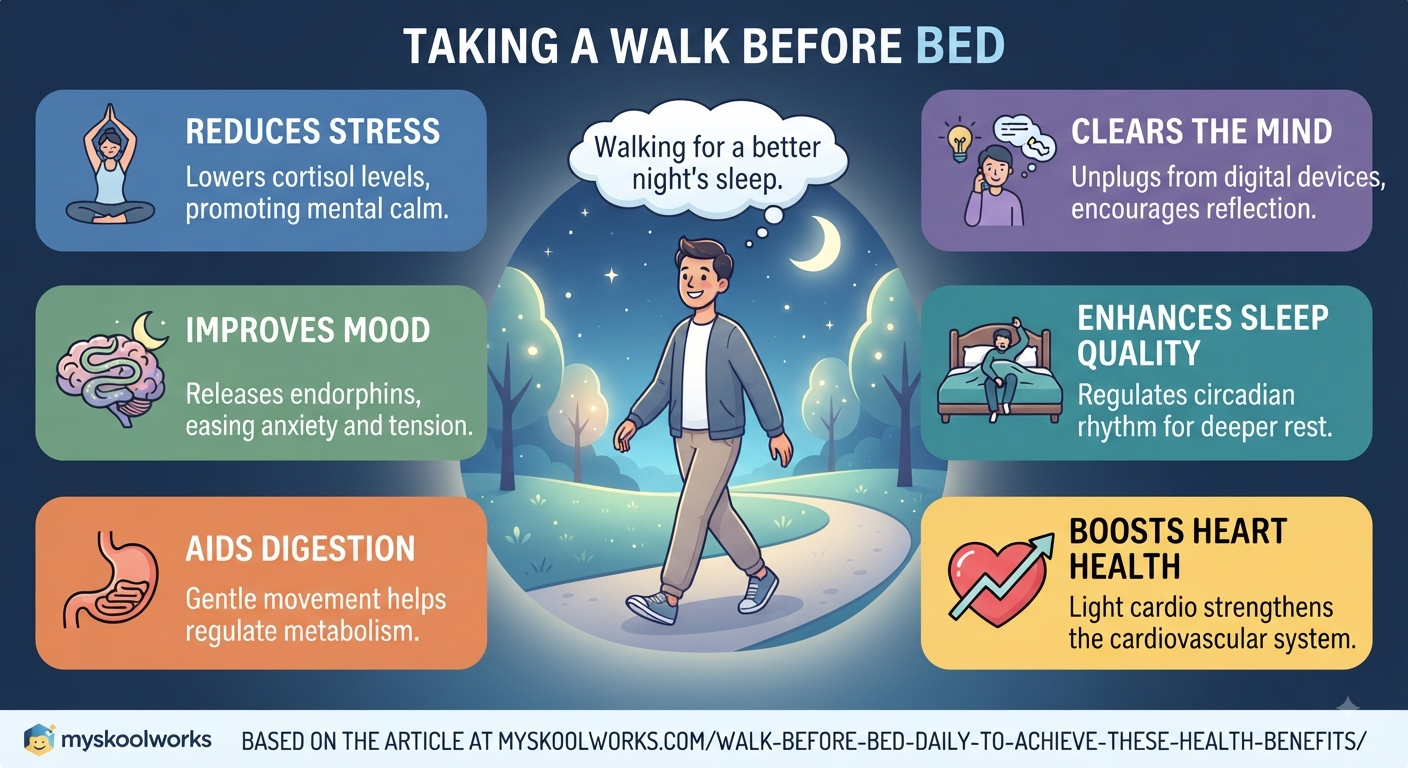
Walking helps regulate your circadian rhythm and reduces stress, making it easier to fall asleep and enjoy deeper rest.
2. Enhanced blood circulation
A gentle walk boosts blood flow, helping deliver oxygen and nutrients throughout the body for better overall health.
3. Reduced stress
Walking triggers endorphins, your natural mood lifters. It clears the mind, relaxes the body, and prepares you for sleep.
4. Lowered blood pressure
Regular walking can help lower blood pressure by easing stress and improving circulation, reducing heart disease risk.
5. Improved digestion
A short walk after dinner can support digestion, reduce bloating and discomfort, and help you sleep more comfortably.
6. Weight management
Walking burns calories and supports a healthy metabolism. Adding it to your night routine can aid in weight control.
7. Muscle relaxation
Light movement helps release muscle tension and stiffness, making your body feel more relaxed before bedtime.
8. Improved mental clarity
Walking helps calm racing thoughts and encourages mindfulness, allowing you to unwind and drift into sleep more easily.
9. Enhanced immune function
Regular physical activity strengthens your immune system, helping your body fight illness more effectively.
10. Longevity
Consistent walking is linked to a longer, healthier life by reducing the risk of chronic diseases and supporting overall wellness.
In summary, walking before bed helps regulate sleep, reduce stress, improve digestion, relax the body, and strengthen the immune system — all contributing to better health and well-being.