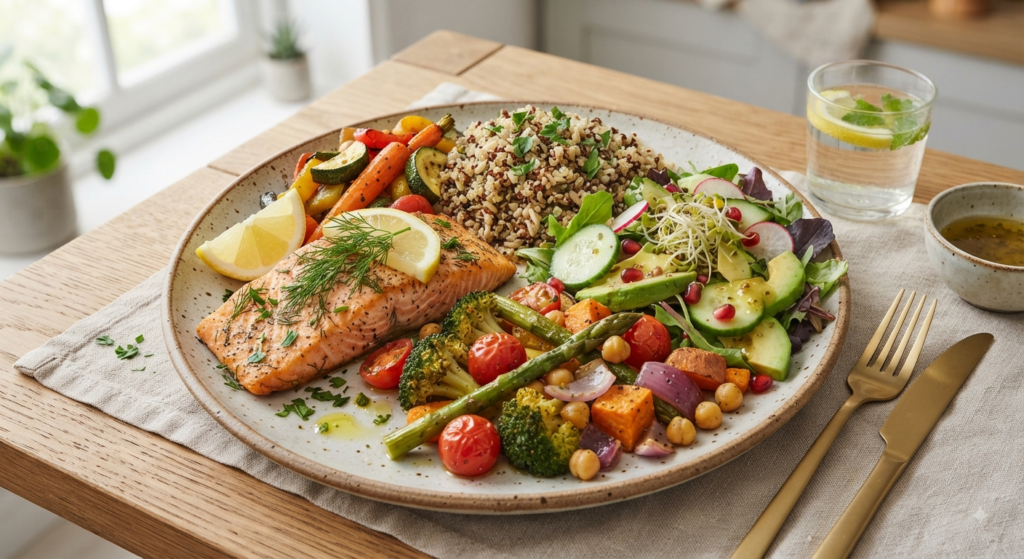
The Flexitarian Diet was created by dietitian Dawn Jackson Blatner to help people enjoy the benefits of a mostly plant-based diet without fully giving up meat, fish or dairy. It focuses on eating more fruits, vegetables, whole grains and plant proteins, while allowing animal foods in moderation. It’s a flexible, easier approach than strict vegetarian or vegan diets.
Health Benefits of a Flexitarian Diet
1. More fruits and vegetables
Boosts your intake of vitamins, minerals and antioxidants.
2. Better digestion
High-fibre plant foods support regular bowel movements and gut health.
3. Lower risk of chronic disease
Plant-rich diets help reduce the risk of heart disease, diabetes and certain cancers.
4. Weight management
Whole, nutrient-dense foods can support healthy weight loss and maintenance.
5. Reduced inflammation
Plant foods contain anti-inflammatory compounds that protect long-term health.
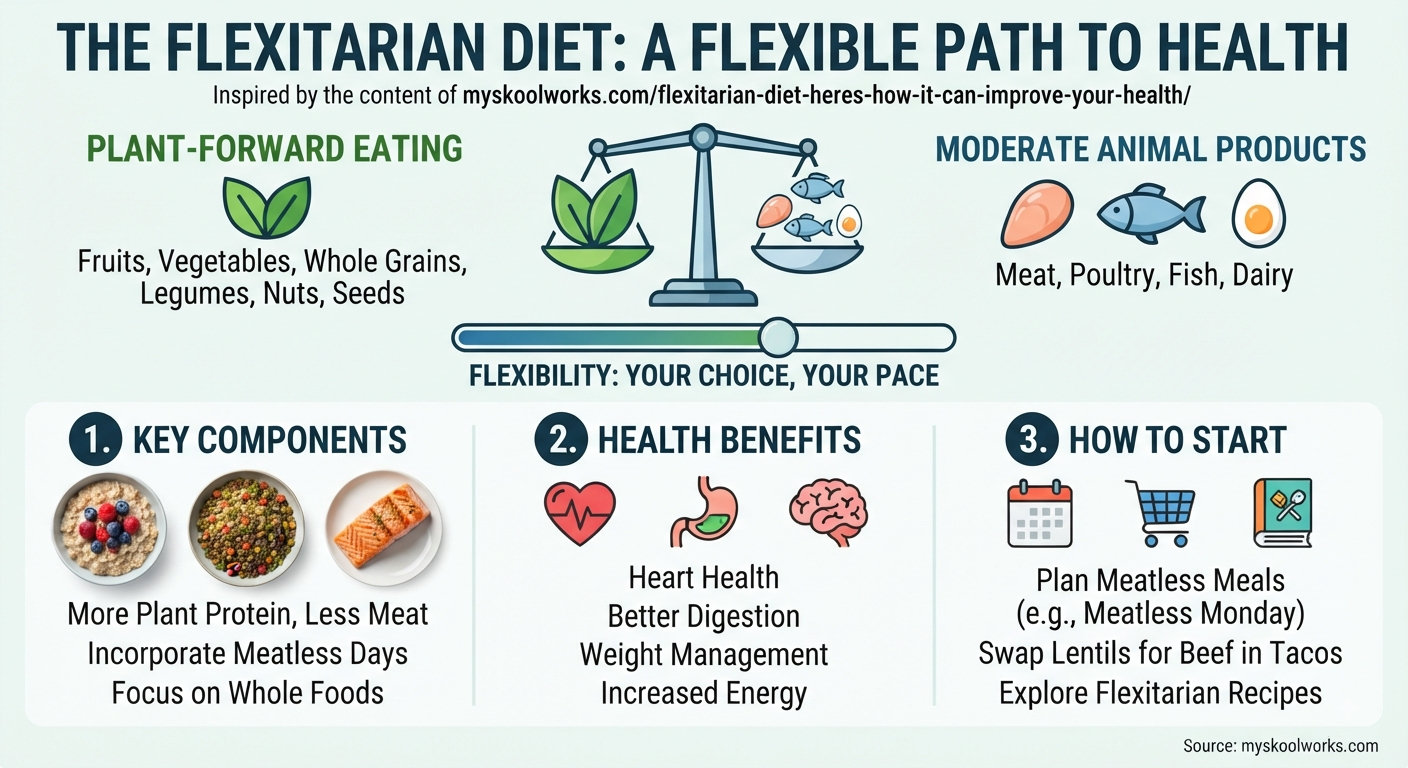
6. Higher energy levels
Whole grains, fruits and vegetables provide steady, lasting energy.
7. Healthier skin
Antioxidants in plant foods help reduce signs of aging and improve skin appearance.
8. Stronger immunity
Nutrient-rich produce helps strengthen the immune system.
9. Lower environmental impact
Eating fewer animal products reduces resource use and supports sustainability.
10. Overall well-being
A varied plant-forward diet supports better health, mood and lifestyle balance.
In summary, a flexitarian diet improves health by increasing nutrient intake, supporting weight control, lowering inflammation and reducing disease risk. While the diet is not strictly defined, research on vegetarian and vegan eating shows that the more whole, minimally processed plant foods you include, the more benefits you gain.