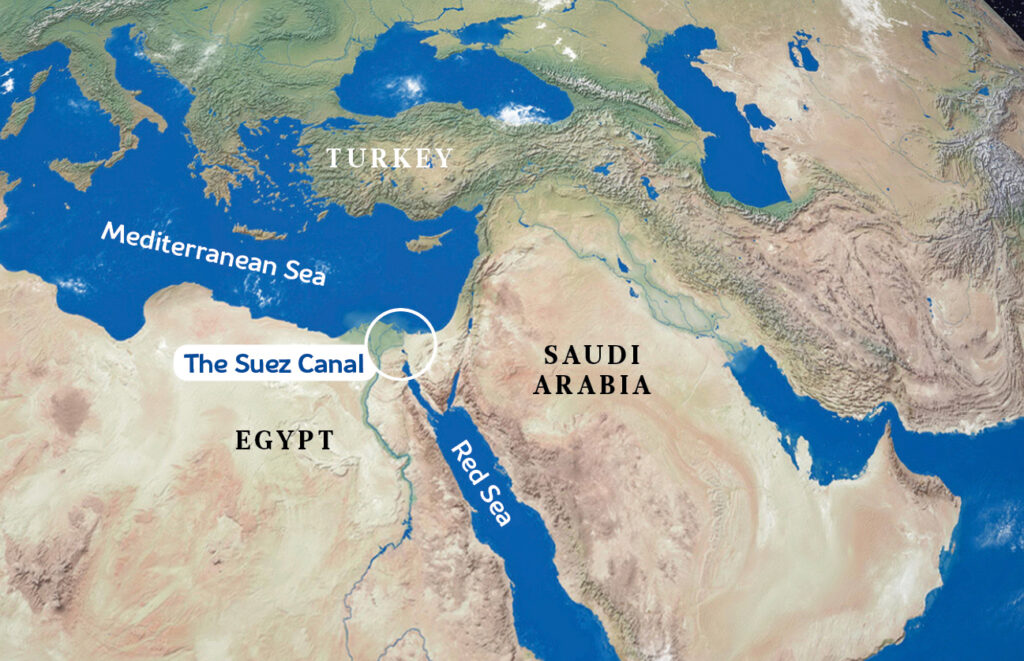
The Suez Canal is one of the world’s most critical maritime chokepoints, functioning as the primary artery for global trade between the East and the West. Below is a detailed analysis of its history, economic significance, and strategic role.
1. Historical Context: Construction
- The Vision: While ancient pharaohs (like Senusret III) attempted to link the Red Sea and the Mediterranean via the Nile, the modern canal was a 19th-century engineering marvel.
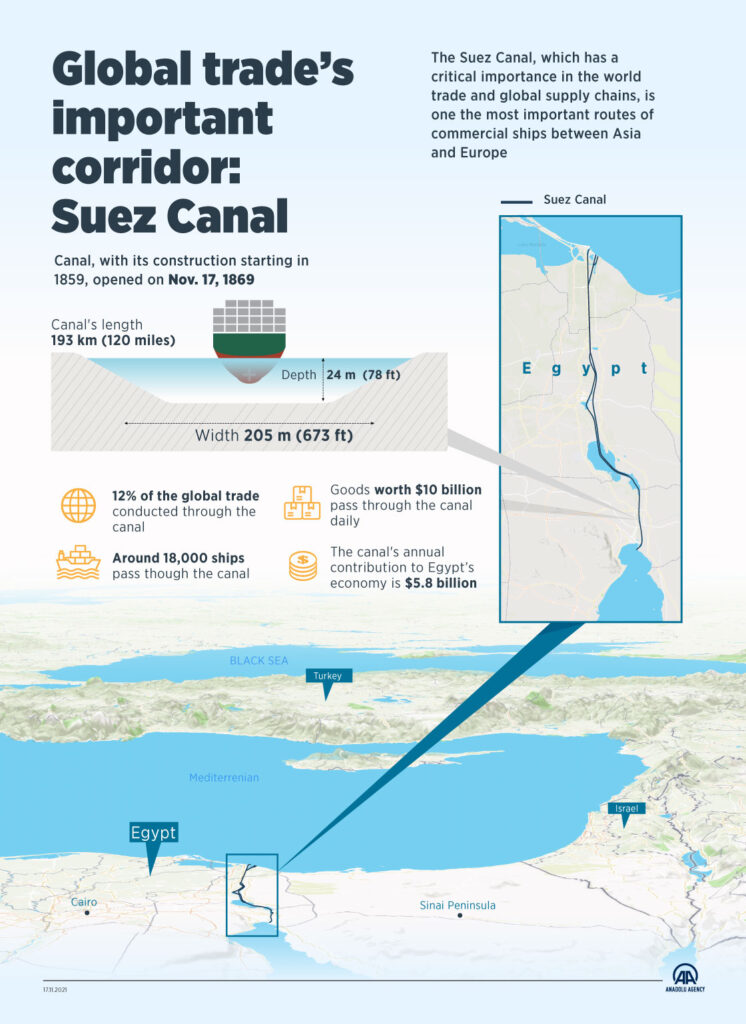
- The Build: Construction began in 1859 and was completed in 1869. It was spearheaded by French diplomat Ferdinand de Lesseps and his Compagnie de Suez.
- The Human Cost: The project relied on the mobilization of hundreds of thousands of Egyptian laborers under harsh conditions. Estimates of deaths among these workers reach into the tens of thousands.
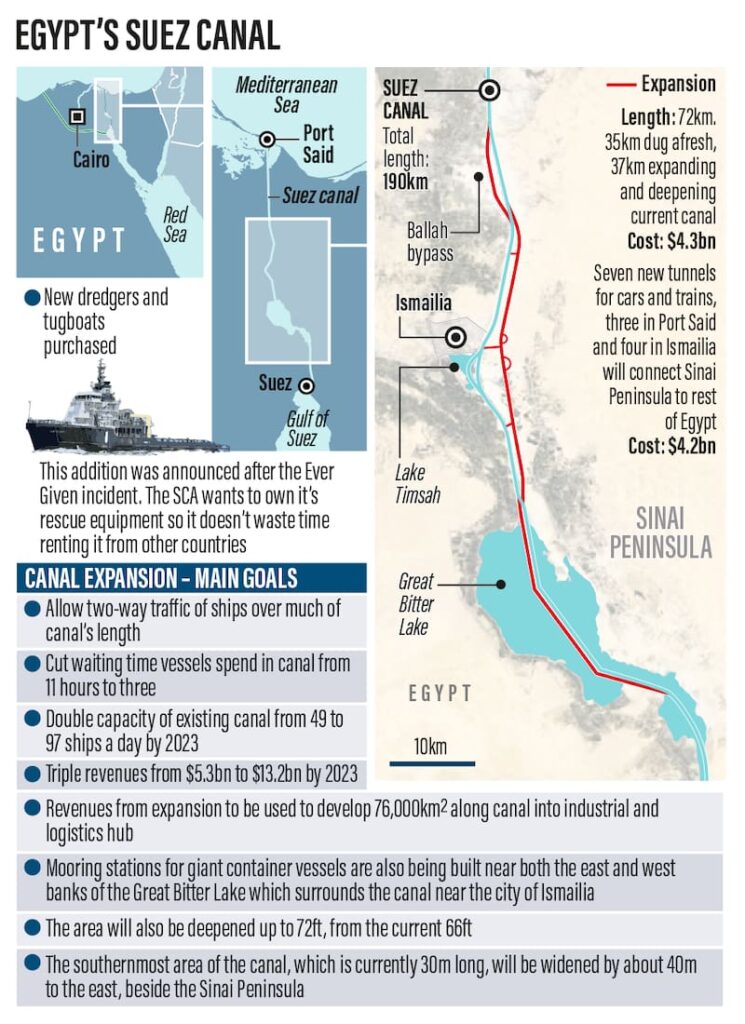
- Evolution: Originally a single-lane waterway, it has undergone massive expansions, most notably the 2015 “New Suez Canal” project, which added a parallel 35-kilometer channel to allow two-way traffic and accommodate larger vessels.
2. Financial Dynamics
- A National Lifeline: The Canal is one of Egypt’s most vital sources of foreign currency, second only to tourism.
- Revenue Generation: Revenue is generated through transit tolls paid by thousands of ships annually. In recent years, annual earnings have reached record highs, exceeding $9 billion USD, though these figures fluctuate based on global trade volume and security conditions.
- Expansion Costs: Egypt has invested billions (e.g., the $8.2 billion for the 2015 expansion) to maintain its competitiveness against alternative routes and larger ship classes.
3. Strategic & Geopolitical Analysis
The Suez Canal is not merely a waterway; it is a geopolitical lever.
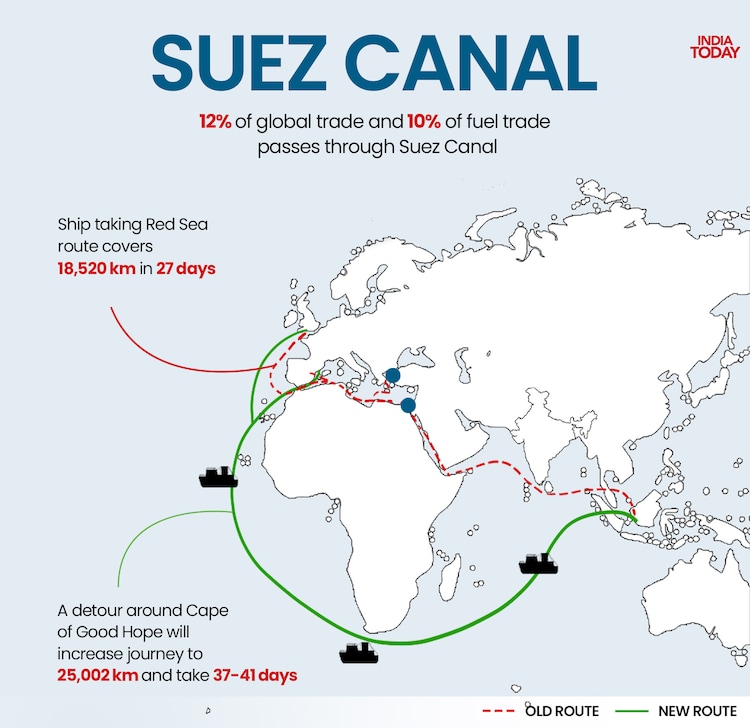
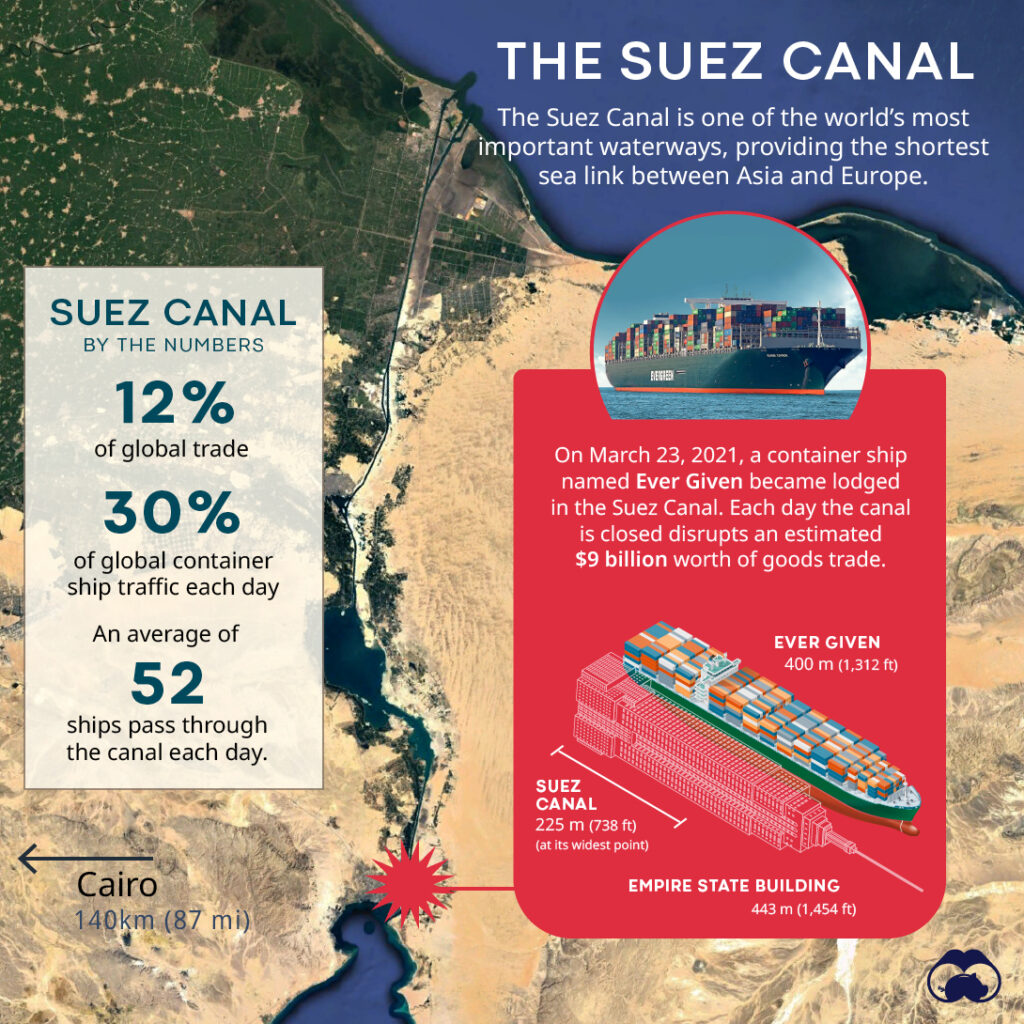
- Global Dependency: Approximately 12% of global trade and 30% of global container traffic transit through the canal annually. It serves as the shortest maritime link between Europe and Asia, saving ships thousands of miles compared to the alternative route around the Cape of Good Hope (the southern tip of Africa).
- Energy Corridor: It is a major artery for oil and liquefied natural gas (LNG). Any disruption here triggers immediate volatility in global energy markets.
- As a “Flashpoint”: Because of its importance, it has repeatedly been a theater of conflict:
- 1956 Suez Crisis: Nationalization by President Nasser led to an invasion by Britain, France, and Israel.
- 1967–1975 Closure: The canal was closed for eight years following the Six-Day War, forcing global shipping to adapt to the longer African route.
- Ever Given (2021): The accidental grounding of a single container ship demonstrated the extreme vulnerability of global supply chains, costing billions of dollars per day in global trade losses.
- Security Strategy: Egypt maintains a high-security posture to prevent terrorism or sabotage, recognizing that any closure creates a global economic crisis that forces international powers to intervene.
Quick Fact Table
| Feature | Details |
|---|---|
| Length | ~193 km (120 miles) |
| Location | Egypt (separating Africa from Asia) |
| Connecting Waters | Mediterranean Sea to the Red Sea |
| Daily Traffic | ~50–70 ships |
| Primary Cargo | Petroleum, LNG, grain, ores, metals, container goods |
| Strategic Takeaway: | The Suez Canal’s strategy is built on geographical inevitability. Because it is the “fastest” route, the world is heavily incentivized to keep it open. However, this also creates a “chokepoint risk”—if the canal is blocked (by physical accident or geopolitical tension), the world has no immediate alternative, leading to supply chain fragility and market spikes. |