How Mindfulness Can Help
Below are some key areas where mindfulness can be useful:
Mental Health
Mindfulness-based interventions (MBIs) can help with anxiety, depression, and stress. Studies show that MBIs can be as effective as cognitive behavioural therapy (CBT), which is a common form of psychotherapy.
Research on mindfulness for ADHD also shows promising results, though more studies are needed.
Stress
There is strong evidence that MBIs reduce stress. Meta-analyses show that online MBIs have a moderate and meaningful effect on lowering stress levels.
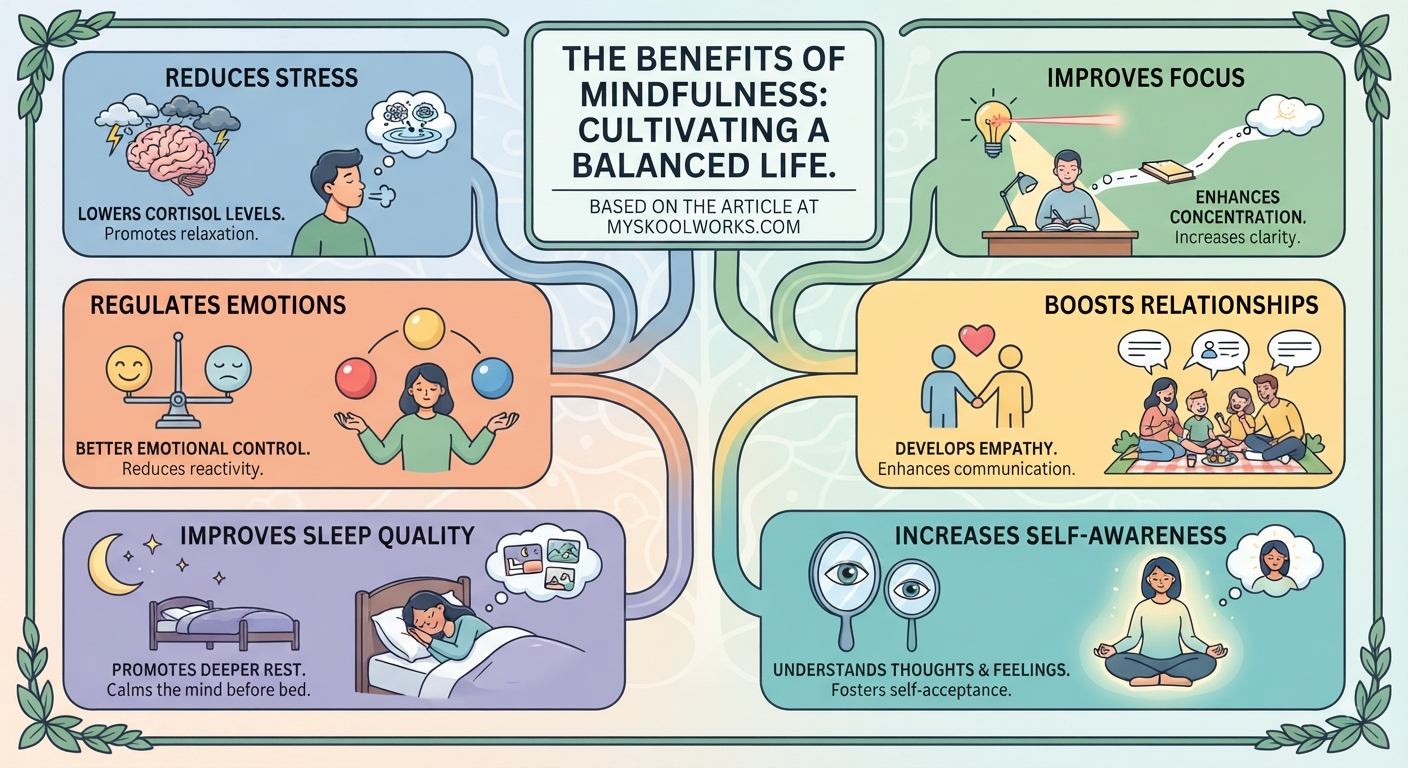
One study found that students who completed an 8-week mindfulness program had much lower distress during exam periods compared to students who received their usual support.
For employees, MBIs have been shown to reduce stress, burnout, mental distress, and physical symptoms. They also improve well-being, compassion, mindfulness, and job satisfaction.
Chronic Pain
Mindfulness may help people living with chronic pain. A review of 30 randomized controlled trials found mindfulness meditation led to improvements in pain management.
Some evidence also suggests MBIs can reduce blood pressure and improve cancer-related fatigue, although more research is required for other physical conditions.
Relationships
While mindfulness is often practiced personally, interpersonal mindfulness focuses on awareness during interactions with others.
Mindfulness can help improve:
- Present-moment awareness during conversations
- Active listening skills
- Reducing reactive or emotional responses
- Non-judgmental attitudes in relationships
Research also shows that mindfulness is linked to better workplace relationships.
Getting Started With Mindfulness
If you’re considering a mindfulness-based program, here are key things to keep in mind:
- Time Commitment: Some programs, like MBSR, require around 90 hours over 8 weeks.
- Accessibility: Time and cost can make long programs difficult for some people.
- Instructor Qualifications: Choose trained, experienced instructors — especially for structured programs like MBCT.
- Potential Adverse Effects: While generally safe, some people may experience anxiety or depersonalization during intensive meditation.
- Measurement Challenges: Mindfulness is subjective, making progress harder to measure clearly.
If you want to start practicing mindfulness on your own, try the steps below:
- Decide what type of practice works for you — formal meditation or adding mindful moments into your day.
- Start small: Begin with 5 minutes and slowly increase the time.
- Choose a consistent time: Practicing at the same time daily helps build a routine.
- Find a quiet space: Use a calm area at home, or use headphones and soft music if practicing at work.
- Use guided meditations: Apps and online videos can help beginners get started.
- Try different techniques: Experiment until you find what feels right.
- Be consistent: Short, regular practice is more effective than long, occasional sessions.