Gratitude is a conscious, positive emotion we feel when we appreciate something — a kind gesture, a compliment, or simply the good things in our lives. We’re taught to say “thank you,” but gratitude is more than politeness. Research shows it can actually make us healthier and happier.
In positive psychology, gratitude is strongly linked to greater happiness. It helps us feel more positive emotions, enjoy good experiences, improve health, recover from stress, and build stronger relationships.
Studies also show that expressing gratitude improves relationships at home and at work. Couples who regularly express thankfulness show more trust and long-term happiness. In the workplace, gratitude helps people feel more connected, motivated, and productive.
How Gratitude Improves Mental Health
Gratitude doesn’t just feel good — it changes the brain in powerful ways.
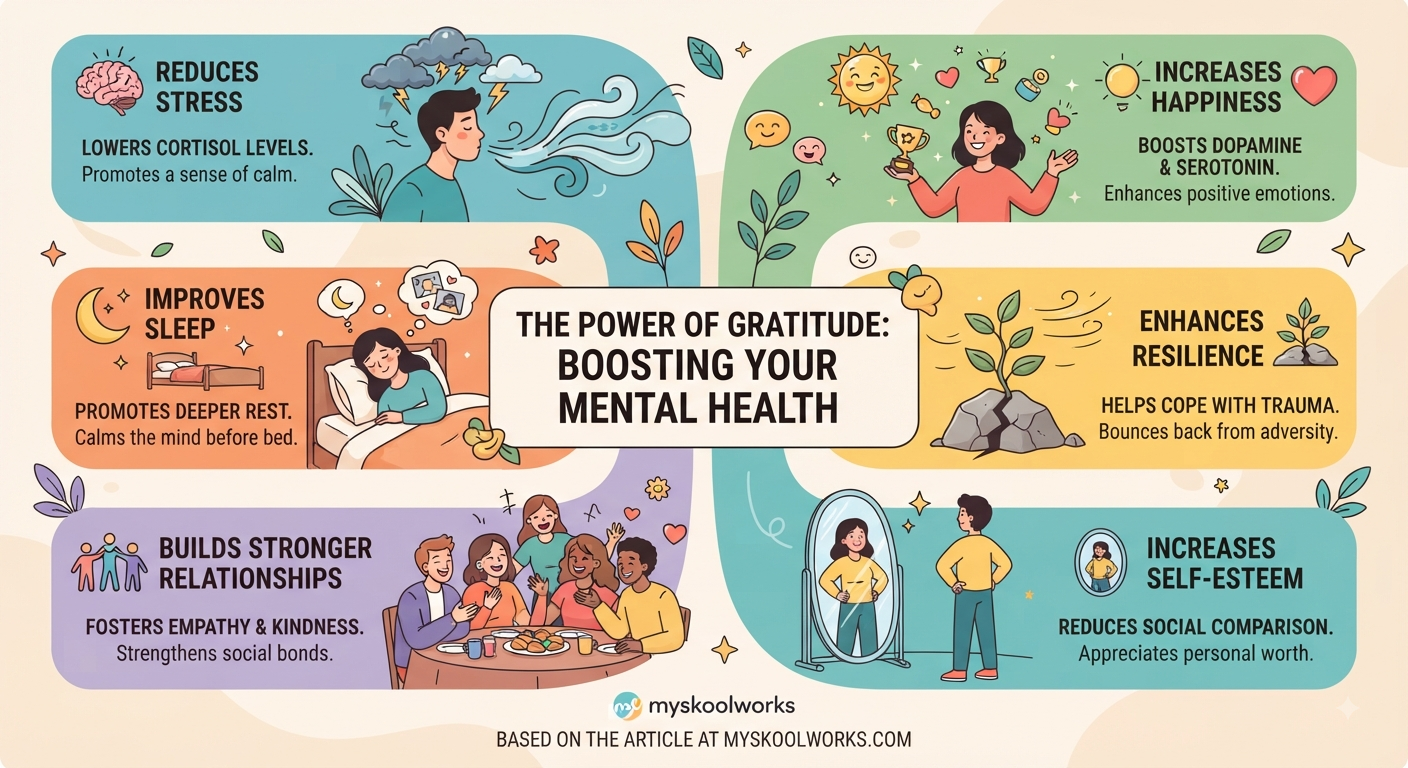
Research shows that feelings of thankfulness activate areas of the brain involved in moral judgment and emotional processing. People who regularly practice gratitude show stronger neural activity in these regions.
Gratitude also:
- creates new connections in the brain’s “bliss center,”
- reduces fear and anxiety by regulating stress hormones,
- increases dopamine and serotonin — chemicals linked to happiness,
- supports positive thinking and emotional balance.
Many antidepressants work by boosting serotonin — gratitude naturally helps increase it. Practicing gratitude daily strengthens these pathways, helping you build a long-lasting positive mindset.
Gratitude has also been shown to improve sleep, reduce stress, ease depression, and even lower physical pain. Some studies found that grateful people have healthier heart function and lower levels of cortisol, the body’s main stress hormone. Lower cortisol means less anxiety, better memory, and better overall well-being.
5 Ways to Practice Gratitude
Just 15 minutes a day, five days a week, for about six weeks can create lasting improvements in your mood and mindset. Here are simple ways to begin:
- Say what you’re thankful for — speak it out loud. Hearing your own words strengthens the feeling.
- Write it down — use a journal and list a few things you’re grateful for each day.
- Share your gratitude — thank someone new each week to strengthen your connections.
- Meditate — guided gratitude meditations help widen your perspective and calm your mind.
- Find gratitude in hard moments — even during challenges, look for one small thing to be thankful for. It builds emotional resilience.
Gratitude is not just about manners — it is a pathway to happiness. Life will always have ups and downs, but when we choose to notice the good, we improve our mental health, strengthen our relationships, and feel more hopeful. Gratitude is one of the simplest ways to create a happier life.