The Vietnam War (1955–1975) was a protracted, high-stakes conflict that pitted the communist government of North Vietnam and its allies against South Vietnam and its primary ally, the United States. It is often remembered as a classic example of asymmetric warfare, where a technologically superior force struggled to defeat a highly motivated, mobile insurgency.
1. Strategic Context & Warfare
- The North (The Strategy of Attrition): The North Vietnamese strategy was political and psychological rather than purely territorial. They aimed to “outlast” the U.S. By inflicting steady, persistent casualties and creating a political quagmire for the American government, they aimed to break the U.S. public’s will to continue the war.
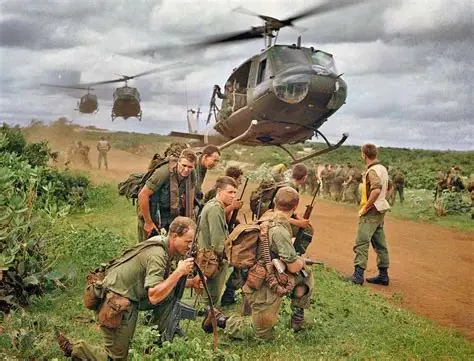
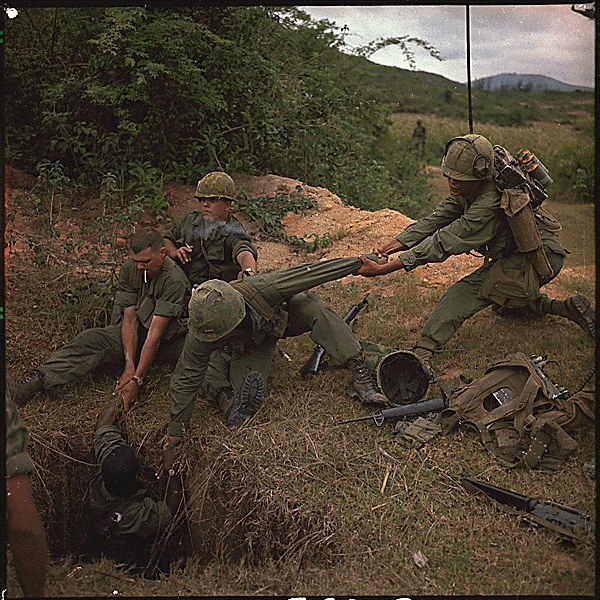
- The U.S. (The Strategy of Escalation & Search and Destroy): The U.S. operated on a strategy of “limited war,” attempting to prop up the South Vietnamese government (ARVN) while using superior firepower to destroy communist forces. Tactics included “Search and Destroy” missions to find and neutralize Viet Cong units.
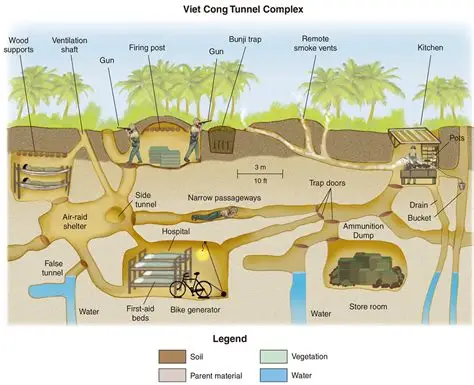
- Guerrilla Warfare: The Viet Cong (National Liberation Front) fought as an irregular force. They used the jungle as cover, employed a massive, complex network of underground tunnels (such as the Củ Chi tunnels), and used hit-and-run ambushes to neutralize the U.S. advantage in air power and heavy artillery.
2. Weapons & Infrastructure
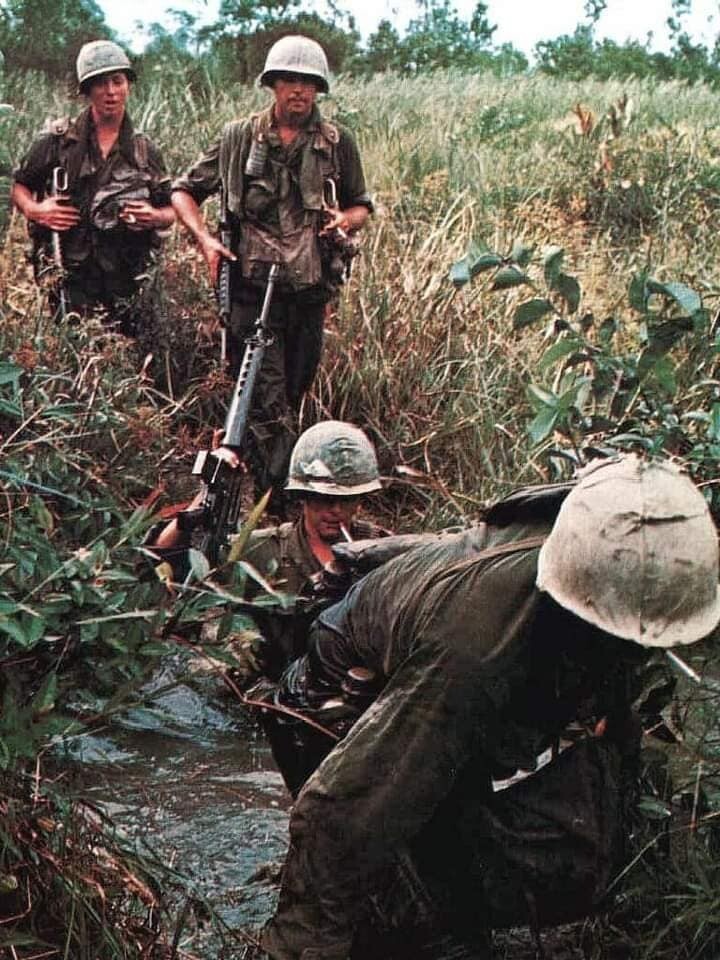
- Weapons: The North was heavily supplied by the Soviet Union and China with AK-47 assault rifles, rocket-propelled grenades (RPGs), and anti-aircraft missile systems. The U.S. primarily used the M16 rifle, the M60 machine gun, and relied heavily on overwhelming air superiority, using bombers (B-52s) and chemical defoliants like Agent Orange.
- “Construction” (The Ho Chi Minh Trail): While the canal is an infrastructure project, the “construction” of the war effort was the Ho Chi Minh Trail. This was a massive, shifting network of mountain and jungle paths through Laos and Cambodia that served as the primary logistics artery for the North to move men and supplies into the South.
3. How North Vietnam “Won” and the U.S. Turned Back
The North did not necessarily win through a single decisive military victory, but through a strategy of denial.
- Psychological Exhaustion: The U.S. military could win almost every conventional battle, but they could not “secure” the country. The North accepted massive casualties—over a million soldiers—that the American public would never have tolerated.
- Political Shift: As the war dragged on, televised footage of combat and the rising death toll fueled a massive anti-war movement in the U.S. Faced with domestic instability and the realization that the South Vietnamese government could not hold its own, the U.S. withdrew its combat troops in 1973, leaving the South vulnerable.
- Final Collapse: Without direct U.S. support, the South Vietnamese army eventually collapsed under a full-scale conventional invasion by the North Vietnamese Army in 1975, leading to the fall of Saigon.
4. Countries Aiding Vietnam
- North Vietnam: Primarily supported by the Soviet Union (financial and heavy military aid) and China (supplies, weapons, and engineering troops). North Korea also provided limited military support, including pilots.
- South Vietnam: Primarily supported by the United States, with additional military contributions from allies like South Korea, Australia, Thailand, New Zealand, and the Philippines.
5. Key Differences: Conventional vs. Guerrilla Warfare
| Feature | Conventional Warfare | Guerrilla Warfare |
|---|---|---|
| Objective | Capture territory/destroy enemy army. | Eradicate the enemy’s will to fight. |
| Engagement | Large-scale, head-on battles. | Hit-and-run, ambushes, sabotage. |
| Command | Hierarchical, rigid, centralized. | Flexible, decentralized, autonomous. |
| Terrain Use | Fixed bases and supply lines. | Terrain as a weapon (tunnels, jungles). |
| Success Metric | Territory gained or enemy force size reduced. | Time, political pressure, and endurance. |